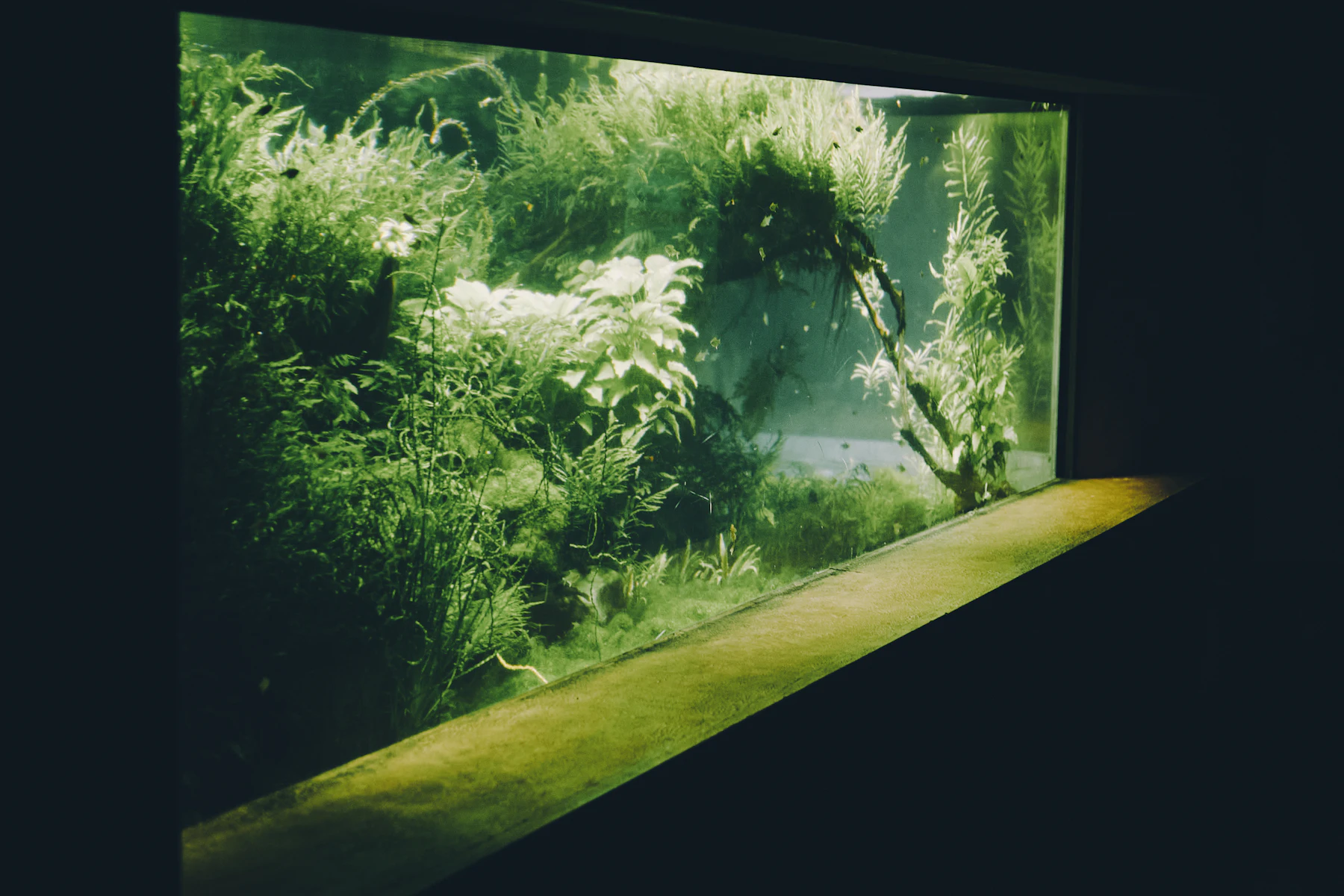
The right tank for the right vision.
Size determines stability, stocking, equipment, maintenance effort, and what kind of aquascape is even possible. Choose with intention.
Size at a glance
Pico / Nano
4 – 30 L
Small
30 – 80 L
Medium
80 – 200 L
Large
200 – 400 L
XL / Display
400 – 1000+ L
Pico / Nano
4 – 30 L
ExpertThe most demanding format per litre. Water parameters swing rapidly. Rewarding when mastered.
Best for: Shrimp, snails, nano fish, moss
Length
15 – 45 cm
Width
15 – 30 cm
Height
15 – 30 cm
Small
30 – 80 L
Beginner–IntermediateThe sweet spot for many hobbyists. Enough water volume for stability, small enough to manage.
Best for: Planted tanks, small tetras, corydoras
Length
45 – 60 cm
Width
25 – 35 cm
Height
30 – 40 cm
Medium
80 – 200 L
Beginner–IntermediateAmple space for creative composition. Most aquascape photography features this format.
Best for: Community tanks, Nature Aquarium, biotopes
Length
60 – 90 cm
Width
35 – 45 cm
Height
40 – 55 cm
Large
200 – 400 L
IntermediateRequires serious filtration and lighting investment. Maintenance effort increases significantly.
Best for: Dutch tanks, community fish, medium cichlids
Length
90 – 120 cm
Width
45 – 60 cm
Height
50 – 60 cm
XL / Display
400 – 1000+ L
AdvancedThese are permanent installations. Foundation support required. Spectacular when done well.
Best for: Display scapes, large cichlids, public aquariums
Length
120 – 200 cm+
Width
60 – 80 cm
Height
60 – 80 cm
Tank shapes
Standard rectangle
The most versatile format. Easy to light, filter, and aquascape. The default choice for almost all styles.
Long (shallow)
Wider footprint, shallower depth. Ideal for scapes that prioritise breadth over height, including paludariums and biotopes.
Cube
Equal length, width, and height. Creates a distinctive framed look. Popular for Nature Aquarium and Iwagumi.
Rimless
No plastic trim. Glass edges are polished for a clean, museum-quality look. The standard for display aquascapes.
Bow front
Curved front glass creates a lensing effect. Adds depth. Harder to light evenly. Less suitable for photography.
Peninsula / L-shape
Viewable from three sides. Suits open-plan rooms. Requires careful hardscape placement for multi-angle appeal.
How size affects your design
Biological stability
Larger water volumes buffer temperature and chemistry swings. A 200 L tank is far more forgiving than a 20 L tank.
Depth of field
Aquascapes need depth. Tanks shallower than 30 cm front-to-back limit the foreground–midground–background transition.
Aspect ratio
The length-to-height ratio affects composition dramatically. A 60 × 45 cm tank allows taller vertical scapes than a 90 × 35 cm shallow long.
Equipment scale
Filter flow, heater wattage, CO₂ diffusion, and lighting intensity all scale with volume. Budget accordingly before committing to a size.