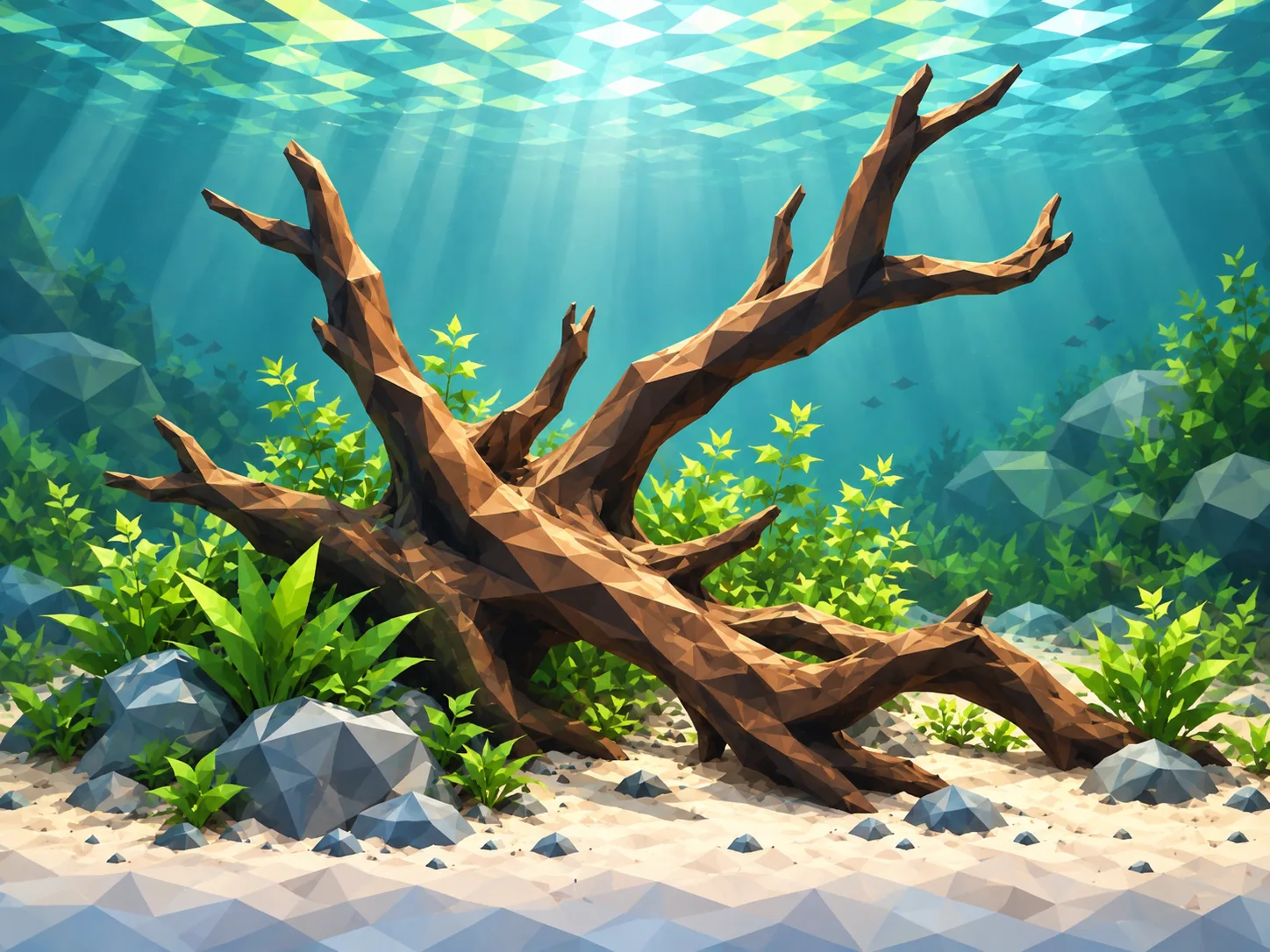
Stone, wood, and earth.
Every aquascape begins with hardscape. The rocks you choose, the driftwood you place, the substrate you lay, these elements outlast every plant and fish you add. Choose deliberately.
Read the hardscape guideSubstrate
The floor of your aquarium affects water chemistry, plant nutrition, and the welfare of bottom-dwelling creatures.

Aquasoil
The gold standard for planted tanks. Rich in nutrients, slightly acidic. Substrate roots anchor better and grow faster.
pH effect
Lowers pH (5.5–7.0)
Plants
Essential for demanding plants
Lifespan
12–18 months active buffering
Examples
ADA Amazonia, Tropica Soil, Fluval Stratum

Inert Sand
Clean, natural look. Ideal for corydoras and bottom-dwellers. Requires nutrient supplementation via root tabs or liquid ferts.
pH effect
Neutral
Plants
Requires root tabs for nutrition
Lifespan
Indefinite
Examples
Pool sand, Caribsea Fine White, blasting sand

Crushed Coral
Ideal for African cichlid tanks, brackish setups, and marine tanks. Not suitable for soft-water plants or shrimp.
pH effect
Raises pH (7.5–8.5)
Plants
Limits plant choices
Lifespan
Indefinite
Examples
Caribsea Aragamax, aragonite sand

Live Sand
Pre-seeded with beneficial bacteria and microfauna. Accelerates cycling in marine tanks. Supports sand-sifting organisms.
pH effect
Slightly alkaline
Plants
Marine only
Lifespan
Self-sustaining with good flow
Examples
Caribsea Life Rock, Fiji Pink
Aquascaping rocks
Each type has a distinct texture, colour, and effect on water chemistry.

Seiryu Stone
Jagged, angular, grey-blue with white veining
Style: Iwagumi, Nature Aquarium
pH: Slightly raises pH

Dragon Stone (Ohko)
Porous, cave-like, earthy brown-orange
Style: Nature Aquarium, biotope
pH: pH neutral

Lava Rock
Rough, porous, black or red-brown
Style: Versatile - freshwater and marine
pH: pH neutral to slightly lowers

Pagoda Stone
Layered, horizontal strata, light grey
Style: Dutch, landscape styles
pH: Slightly raises pH
Composition rules that work
These aren't arbitrary design rules, they reflect how the eye reads a composition and how nature actually arranges stone.
Odd numbers only
Use 1, 3, or 5 main stones, never 2 or 4. Even numbers create visual tension that the eye keeps trying to resolve.
One dominant stone
The oyaishi (main stone) should be noticeably larger and taller than the others. Companion stones support, never compete.
Consistent angle
All stones should lean in the same general direction. Opposing angles create visual chaos.
Bury 20–30%
Stones placed flat on substrate look artificial. Sinking them into the aquasoil makes them feel rooted and natural.
Driftwood
Wood softens the angular geometry of rock hardscape and provides attachment surfaces for mosses, ferns, and anubias. Most driftwood releases tannins, beneficial for soft-water fish but visually discolouring. Boiling or extended soaking reduces this.
Always ensure wood is fully waterlogged before placing it. Dry wood floats and destabilises your hardscape.

Spider Wood
Branching, spindly, red-brown. Creates organic "tree" compositions.

Mopani Wood
Dense, two-toned. Sinks without weights. Long-lasting.

Cholla Wood
Hollow, tubular, lightweight. Used in nano tanks and shrimp setups.

Bogwood
Ancient peat-preserved wood. Releases tannins, darkens water, lowers pH.

Malaysian Driftwood
Heavy, twisted, dark. Classic for planted tanks and biotopes.

Bonsai Driftwood
Specially shaped to resemble bonsai trees. Popular in Nature Aquarium.