Iwagumi Principles
A few stones, a low carpet, open water. With so little in the tank, weak composition cannot hide. Learn the hierarchy, direction and burial that make it convincing.
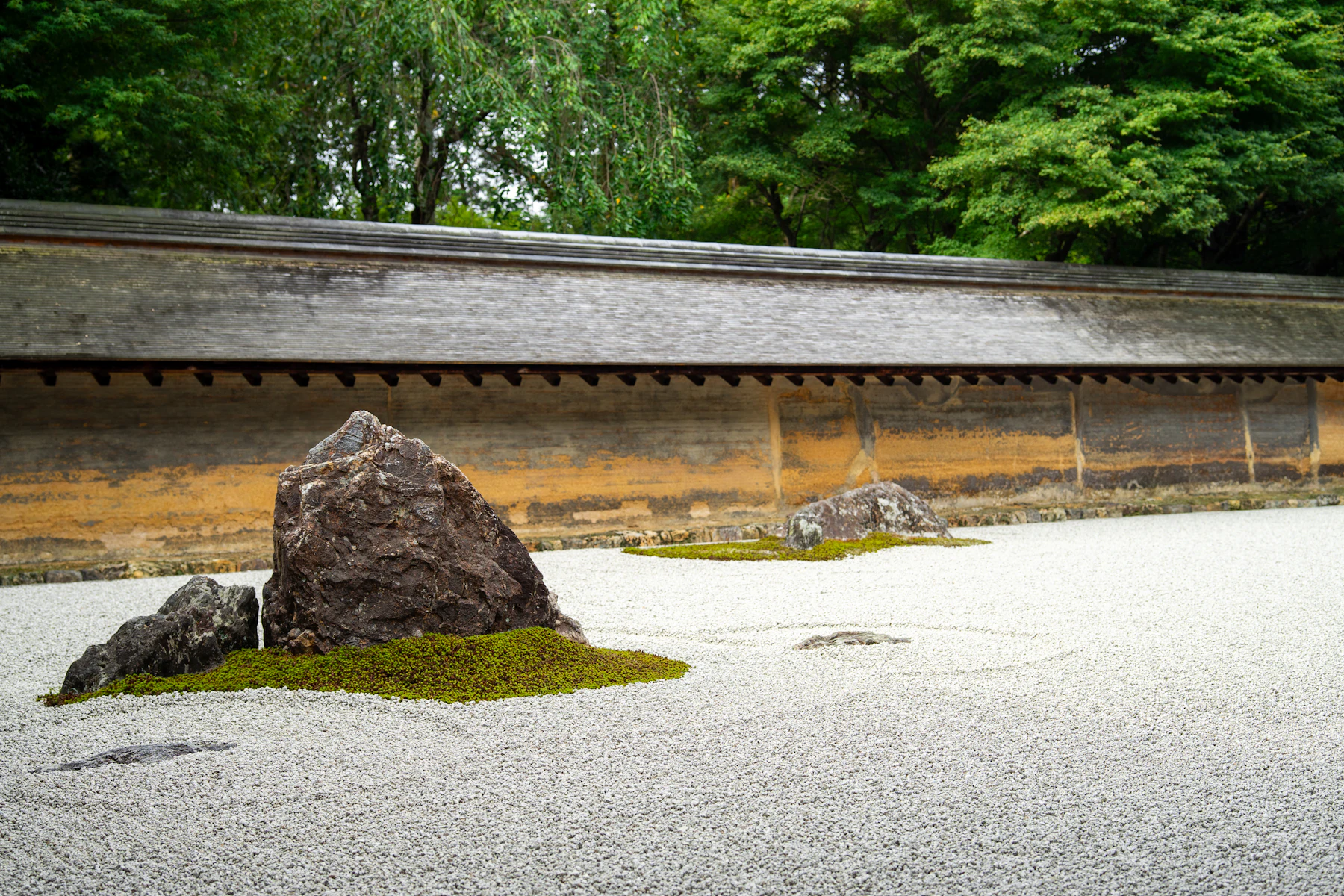
Photo by Bart Wellens on Unsplash
In this guide
- Simplicity is not minimal effort
- Learn the Sanzon structure first
- Choose stones as a family
- Direction creates the invisible flow
- Bury more stone than feels comfortable
- Use substrate to make the tank deeper
- Planting should support the stones
- The clean look still needs biological stability
- The mistakes that flatten an Iwagumi
- A practical build sequence
Few aquascaping styles are as easy to recognise as Iwagumi, or as difficult to build well. A few stones, a low carpet, open water and perhaps one school of fish leave almost nowhere for weak composition to hide.
The usual failure is a collection of attractive rocks that never becomes a landscape. Iwagumi works when size, direction, burial and empty space make the stones look as though they belong to the same place, and that is decided long before you add water.
Simplicity is not minimal effort
Iwagumi grew out of the Nature Aquarium approach associated with Takashi Amano, which borrows heavily from Japanese stone arrangement and from the way rock sits in real landscapes. The tank may contain very little, but nothing in it is casual.
A convincing Iwagumi suggests that its stones belong to one landscape. Their direction, texture, relative size, burial depth and spacing should feel related, as though water, erosion or geology put them there rather than someone arranging pieces one at a time.
Beginners often think the style is mainly about using an odd number of attractive rocks. It is not. Odd groups help because they avoid obvious symmetry, but three mediocre stones placed according to a diagram are still three mediocre stones.
The real work is hierarchy and relationship. One stone leads, the others support it, and empty space lets the arrangement breathe. If every stone demands equal attention, the composition has no sentence structure.
Learn the Sanzon structure first
The clearest starting point is Sanzon Iwagumi, the traditional three-stone form. Each stone has a named role:
- Oyaishi, the main stone
- Fukuishi, the secondary stone
- Soeishi, the smaller supporting stone
The oyaishi sets the direction and character of the whole composition. It is normally the largest and most visually important stone, and its angle suggests the force of water that the rest of the arrangement responds to. The fukuishi balances that direction without competing for dominance, and the soeishi ties the first two together so the group reads as one formation rather than three objects.
Larger layouts add further supporting stones, including small suteishi, sometimes described as sacrificial stones. They are often partly buried or hidden by plants, and they exist to improve the whole rather than to become another focal point.
Do not get too attached to the vocabulary. The useful lesson is that stones have different jobs. Once that hierarchy is visible, adding a fifth or seventh stone becomes much easier, because each addition has to justify itself as support.
Oyaishi
Left and largest. It leads.
Fukuishi
Middle. Balances the lead.
Soeishi
Right and smallest. Ties the group.
Choose stones as a family
A common failure happens before the tank is even set up. The stones simply do not belong together.
Using one stone type is the easiest way to keep colour, texture and weathering consistent. Beyond that, look for pieces whose lines and fractures seem related. Choose the oyaishi first. It needs enough size and character to stay dominant after part of it is buried and plants have grown around it, and a stone that looks enormous on the shop floor can become strangely polite once several centimetres disappear into the substrate.
Then choose supporting stones that echo part of its structure. If the main stone has strong diagonal strata, supporting stones with unrelated vertical fractures make the layout feel assembled from a catalogue. Perfect matching is not the goal. Family resemblance is.
If your budget and transport allow it, buy more stone than the final layout needs. Composition is far easier when you can reject a stone instead of forcing every purchased piece into the tank. The spare stone is not wasted. It prevented a worse aquascape.
Direction creates the invisible flow
Imagine that water has moved through this landscape for years. Which faces would resist the current, and where would smaller material collect?
You do not need hydraulic engineering. You need one consistent visual force. Start with the oyaishi and tilt it until a direction appears, then rotate and lean the supporting stones so they either reinforce that movement or create deliberate tension against it. Radial arrangements are another established approach, with stones that seem to fan out from one implied point while still belonging to the same movement.
What usually fails is accidental disagreement. One stone leans left, another points straight forward, a third lies flat, and a fourth turns its most dramatic face straight at the viewer. Each may look excellent on its own. Together they look like a meeting that should have been an email.
Turn stones while you view the tank from its normal front position, then check them from above as well. The relationship between their axes is often easier to see from there.
One visual force
Accidental disagreement
Bury more stone than feels comfortable
A stone placed on top of the substrate usually looks placed on top of the substrate. That is rarely the effect you want. Burying the base makes a rock feel anchored to a larger formation hidden below the surface, as if the ground simply continues.
This is one of the most useful counterintuitive moves in the style. You paid for the stone, and now you hide part of it. Do it anyway.
Build the substrate around the stone rather than balancing the stone on a finished slope. Heavy stone needs a stable footing before any water goes in. Set large pieces on the glass or on a sheet of plastic egg crate laid under the substrate, which spreads the load and stops a rock grinding into the base. Never rely on a mound of loose aquasoil to hold a heavy stone upright, because soil softens after flooding and rock settles.
Small rubble can connect the main stones visually. Use it sparingly, and only where broken material would plausibly collect. A neat ring of pebbles around every major stone is decoration, not geology.
Sitting on top
Anchored into the slope
Use substrate to make the tank deeper
Iwagumi is particularly good at making a shallow glass box look like a much larger landscape. Stone scale helps, but the shape of the substrate does much of the quiet work.
Raise the substrate towards the back. Create ridges, valleys or banks that overlap, rather than one flat slope from front to rear. The foreground should not reveal every route through the tank, because a valley that narrows and disappears behind a stone or hill creates more depth than a clear path running straight to the back glass.
Stone size can reinforce the illusion. Larger, more detailed forms near the focal area and smaller stones further away suggest distance. Avoid making the effect too literal, though. A line of stones stepping from large to small at equal intervals looks like a classroom demonstration of perspective.
The best depth cues are noticed only after the landscape has already convinced you.
Rising substrate
Low at the front glass, high at the back.
Disappearing valley
The pale path, lost behind the stone.
Line of depth
The dashed rise the eye follows.
Planting should support the stones
Classic Iwagumi planting is restrained, because a busy plant palette competes with the stone. Low carpeting species are common. Eleocharis, Glossostigma, Micranthemum and similar plants create broad fields while leaving the rock structure legible, and taller grasses can soften a transition or suggest flow.
The exact species matters less than its role. Ask whether a plant reveals the stone, connects it to the substrate, or hides a compositional problem. The third option is popular. If a stone only works after plants conceal half its relationships, fix the stone arrangement before you flood.
Plant texture also changes apparent scale. A small-leaved carpet makes stones feel larger, while coarse leaves make the same rocks look smaller. That is why Iwagumi usually sticks to a limited palette of fine-textured plants: it keeps the scale of the landscape coherent.
A neat ring of pebbles around every major stone is decoration, not geology.
The clean look still needs biological stability
Minimal design does not mean minimal care. A carpet across a large exposed area demands strong plant health, which for most carpeting species means stable CO₂, consistent fertilisation, good circulation and well-controlled light.
There is also nothing to hide algae behind. A patch of hair algae in a jungle-style tank disappears among the stems. The same patch across an Iwagumi foreground becomes the composition.
Do not compensate by starting with strong light. A new carpet needs time to root, and high light raises demand before the plants have enough healthy mass to use it. Begin conservatively, keep CO₂ and nutrients stable, and increase light only when growth gives you a reason.
Stone can change your water chemistry too. Seiryu stone, one of the most popular Iwagumi rocks, contains calcium carbonate and slowly raises hardness and KH. Test any unfamiliar stone before it goes near soft-water livestock: a few drops of vinegar or a descaling acid on a clean surface will fizz if carbonate is present. Rinse the stone thoroughly afterwards.
The prettier rock does not get diplomatic immunity from chemistry.
The mistakes that flatten an Iwagumi
Most weak layouts fail for compositional reasons before they fail horticulturally.
- The oyaishi is too small. After burial and plant growth, the supposed main stone no longer dominates.
- The main stone sits in the centre. The layout turns static and symmetrical.
- Every stone carries equal visual weight. Nothing leads and nothing supports.
- Stone directions disagree by accident. The eye cannot read one landscape or one force.
- The rocks sit on top of the substrate. They look newly delivered rather than embedded.
- Extra stones are added to fill empty space. The negative space was probably helping.
- Plants are used to rescue poor stone placement. Growth hides the symptom while the composition stays weak.
When an Iwagumi feels wrong, the useful response is usually removal or repositioning. Buying another rock is emotionally easier, and it is rarely the first solution.
A practical build sequence
Build the hardscape dry and give yourself time.
- Choose one stone type and collect several sizes with related texture and structure.
- Select the oyaishi first and position it off centre.
- Tilt and rotate it until one clear directional force appears.
- Add the fukuishi and soeishi as support, not as competing focal stones.
- Check the arrangement from the front and from above, looking for related axes.
- Bury the bases and shape the substrate around them so the stones read as one buried formation.
- Add only the supporting stones that improve rhythm, continuity or scale.
- Shape slopes and valleys, letting some lines disappear behind stone or raised substrate.
- Remove one stone you are unsure about and look again. This step is annoyingly effective.
- Choose a restrained plant palette whose mature height and leaf size support the rock.
- Flood only when the hardscape works without plants.
Once planted, let growth soften the arrangement rather than erase it. Trim to keep the stone relationships and open areas visible, and cut the carpet back wherever it starts swallowing a gap you meant to keep.
Use fewer elements, and make them agree. Simplicity is very demanding company.
Find the stone arrangement before you lift it.
Place a main stone and its supporting pieces, sculpt the slope around them, and leave open ground. Removing a rock on screen costs nothing, so try the layout with one fewer.
Open the builder